Work/Yahoo Mail for Android
Production · current role2018 — present

Eight years inside
a 22M-DAU inbox.

I'm a senior Android engineer on Yahoo Mail. Over eight years I've shipped major user-facing features end-to-end, owned the notifications platform, mentored eight engineers, presented dev talks across the org, and authored a defensive publication on a disposable-address form-fill system. Here's how the work has gone.

RoleSenior Software Engineer
TeamYahoo Mail · Android client
PlatformAndroid · Kotlin · Compose
Scale20–22M+ daily active users
Tenure8 years (2018 — present)
FocusFeature lead, mentorship, IP
Yahoo Mail for Android — cover image
01 / CONTEXT
Role & responsibilities

What I actually own.

Across eight years my role has expanded from feature engineer to feature lead, notifications-platform owner, and mentor. The work below is a sample of what was publicly shipped — internal metrics and architecture stay internal.

Feature ownership

Lead the Android-side design and implementation for major features end-to-end — gathering requirements, asking the right questions, covering edge cases, building, instrumenting, and shipping. Cross-team coordination with iOS, web, backend, design, and PM directly.

StreaksEmail SharingTidy InboxAI SummariesRemindersAugmented Reality Ads+ more

Mentorship

Guided eight engineers — mostly juniors growing into mid-level work, plus one experienced engineer joining the Android side. Code reviews, pair programming, design discussions, and thorough internal documentation in Confluence.

8 menteesCode reviewPair programmingDocumentation

Technical leadership

Eight-year owner of the notifications platform — the throughline tying Mail Android to DAU and ad-revenue. Internal dev talks at the team and full-Mail-org level on notifications architecture, channels, and app-standby/Doze. Filed an idea published as a defensive publication on IP.com.

Notifications platformDev talksIP.com publication
02 / SHIPPED
Features

Eight things, eight years.

Six user-facing feature launches plus two long-running platform ownership areas. Each shipped to production. Descriptions stay at the level I’d share in a dev talk — public surface, role, the interesting trade-offs.

User-facing · Shipped to productionFeature launches
FEAT_01Daily engagement · 2025 — present

Streaks

Cross-platform daily-engagement system rewarding consistent inbox use. Android, iOS, web, and backend share a streak event model and dashboard. Currently in active experiment — engagement results are being evaluated.

  • Built the Android client end-to-end: Compose dashboard, achievement celebrations, snackbar morphing, daily worker.
  • Designed the timezone-aware streak ledger and freeze-day logic with the API team.
  • Hardened serialization against R8 minification with a manual deserialization fallback for assets.
  • Persisted sync-throttle state across app restarts to prevent redundant API calls.
KotlinJetpack ComposeWorkManagerCustom Flux
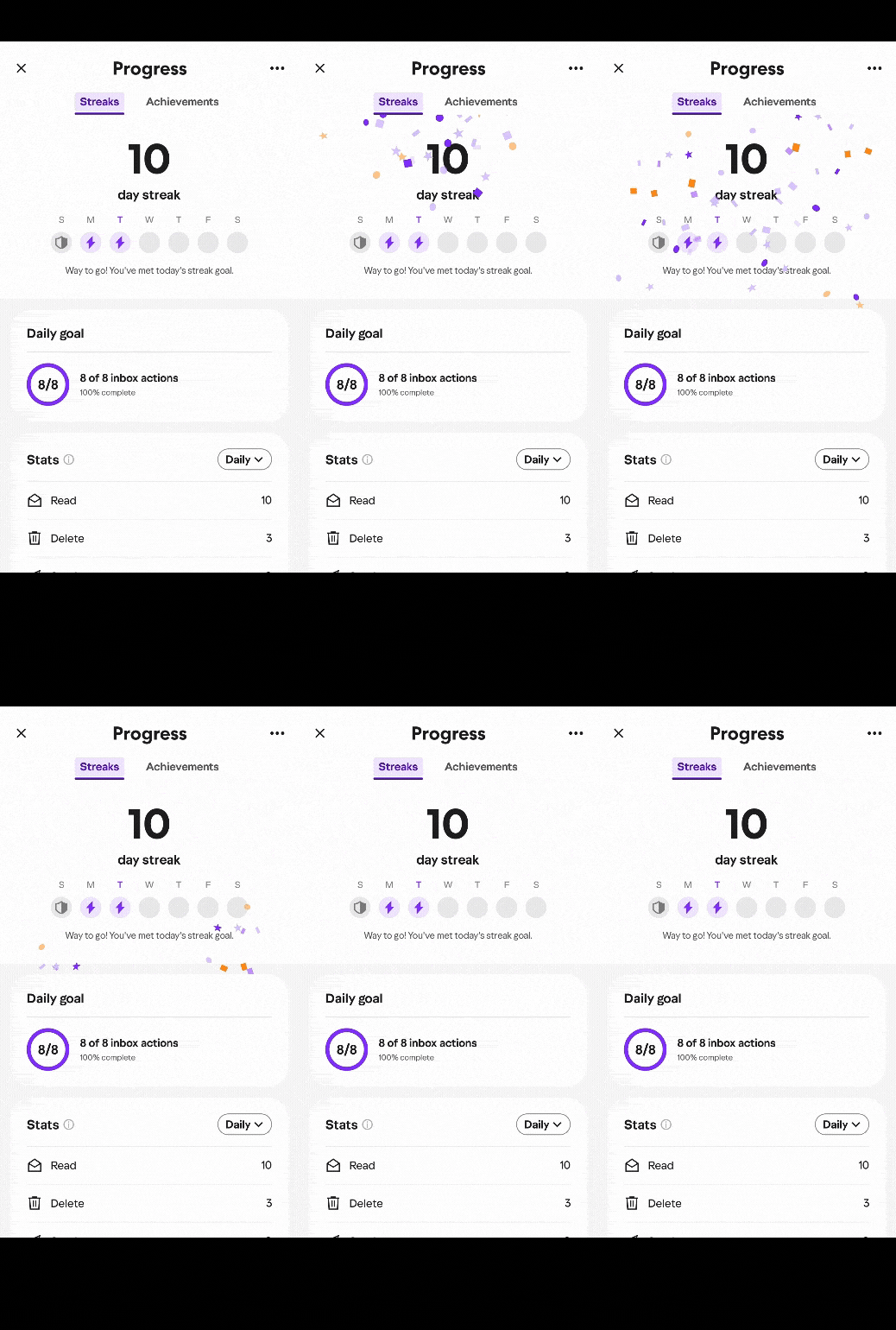
Yahoo Mail Streaks dashboard, daily check-in animationFIG · 01
FEAT_02Share-to-Mail · 2025

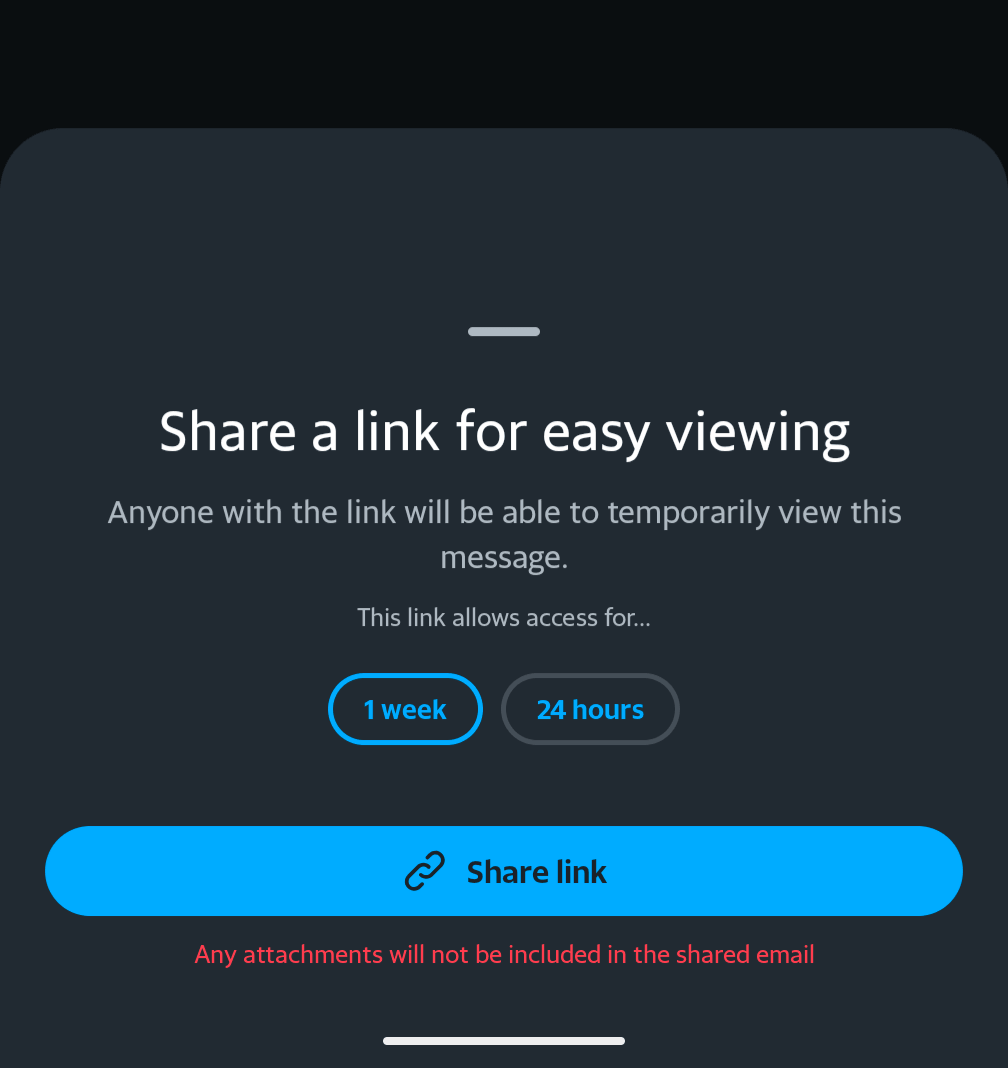
Email Sharing

Share-to-Mail flow with rich previews and a manage-shared-emails experience. 11-part launch covering screenshot capture, share-chooser intent, MessageRead toolbar action, expiration callouts, and post-screenshot upsell.

  • Owned the Android client end-to-end across an 11-part launch.
  • Built screenshot capture, manage-shared-emails bottomsheet, and Forward → Share interception.
  • Coordinated with the Mail Plus web service team for the public sharing endpoint.
  • Instrumented user-selected share options for downstream analysis.
  • Experiment had a clear winner across a 2-week Android 14 window — 0.94% lift in email-read users who used share+forward, and 5.6% lift in shares+forwards per opener. Both statistically significant.
KotlinAndroid IntentsJetpack Compose
Share-to-Mail flow with rich preview on Yahoo Mail AndroidFIG · 02
FEAT_03Bulk inbox cleanup · 2024 — 2025

Tidy Inbox

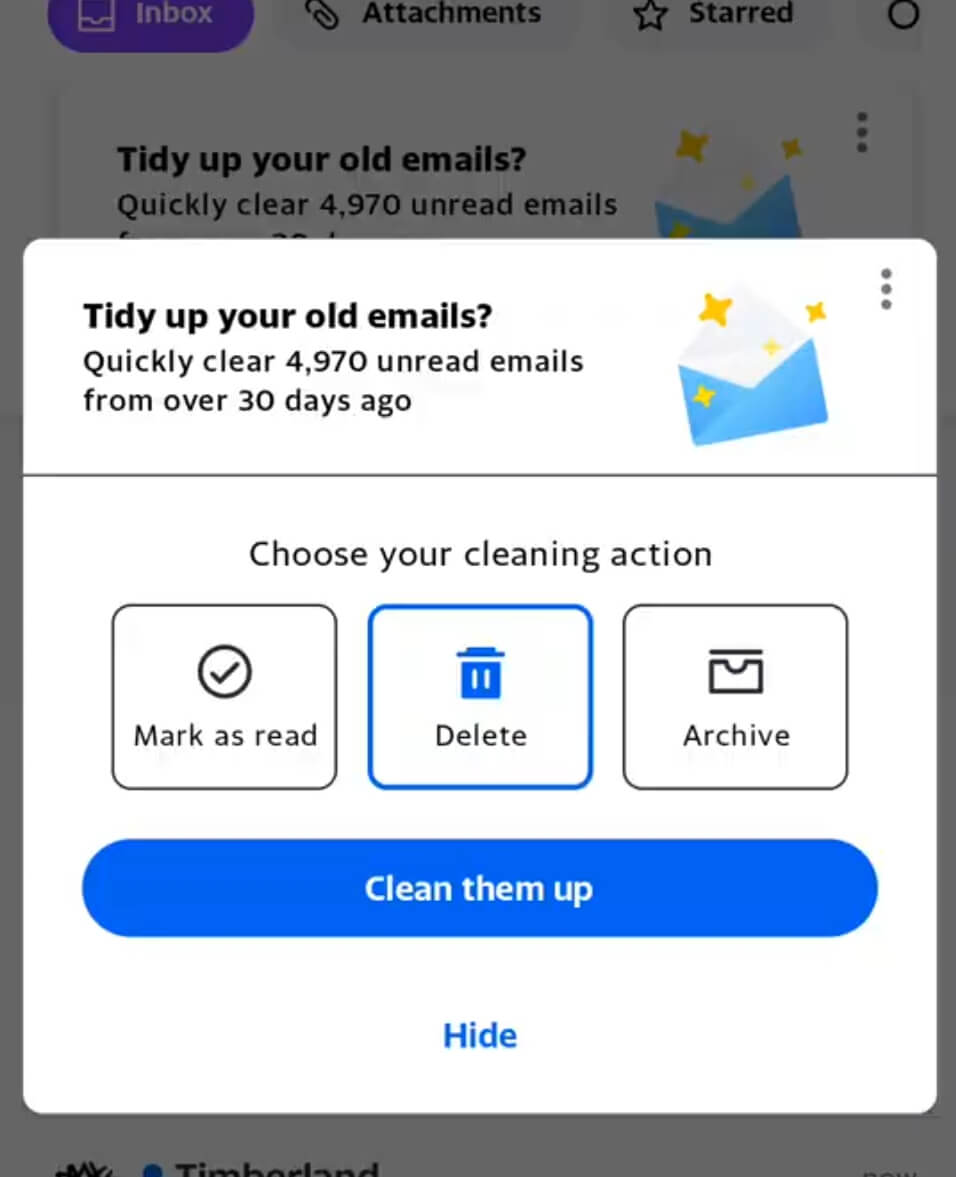
Daily Top-of-Inbox card surfacing unread emails older than 30 days that users likely don’t care about. Three bulk-action choices: archive, mark-read, delete. Helps users tame their inboxes — and at scale, deleting unread mail also reduces server-storage cost. GA’d via config in 2025.

  • Built the Top-of-Inbox card and unread-count API integration.
  • Built the daily scheduling worker with idle-check delay tuning.
  • Locked the bulk action to unread-only after a regression caught it acting on read mail.
  • 12.2% of users saw the upsell in a given week; 4.8%+ of eligible users engaged; 45.6% of engaged users completed a bulk action.
  • Heavier user cohorts responded strongest — Fanatics 9.7% CTR / Loyalists 7.1% CTR, deleting ~314 and ~190 messages per week (vs ~62 and ~44 for Occasionals and Tourists).
KotlinJetpack ComposeWorkManager
Tidy Inbox Top-of-Inbox bulk-cleanup card on Yahoo Mail AndroidFIG · 03
FEAT_04AI-driven notifications · 2023 — 2024

AI in Notifications

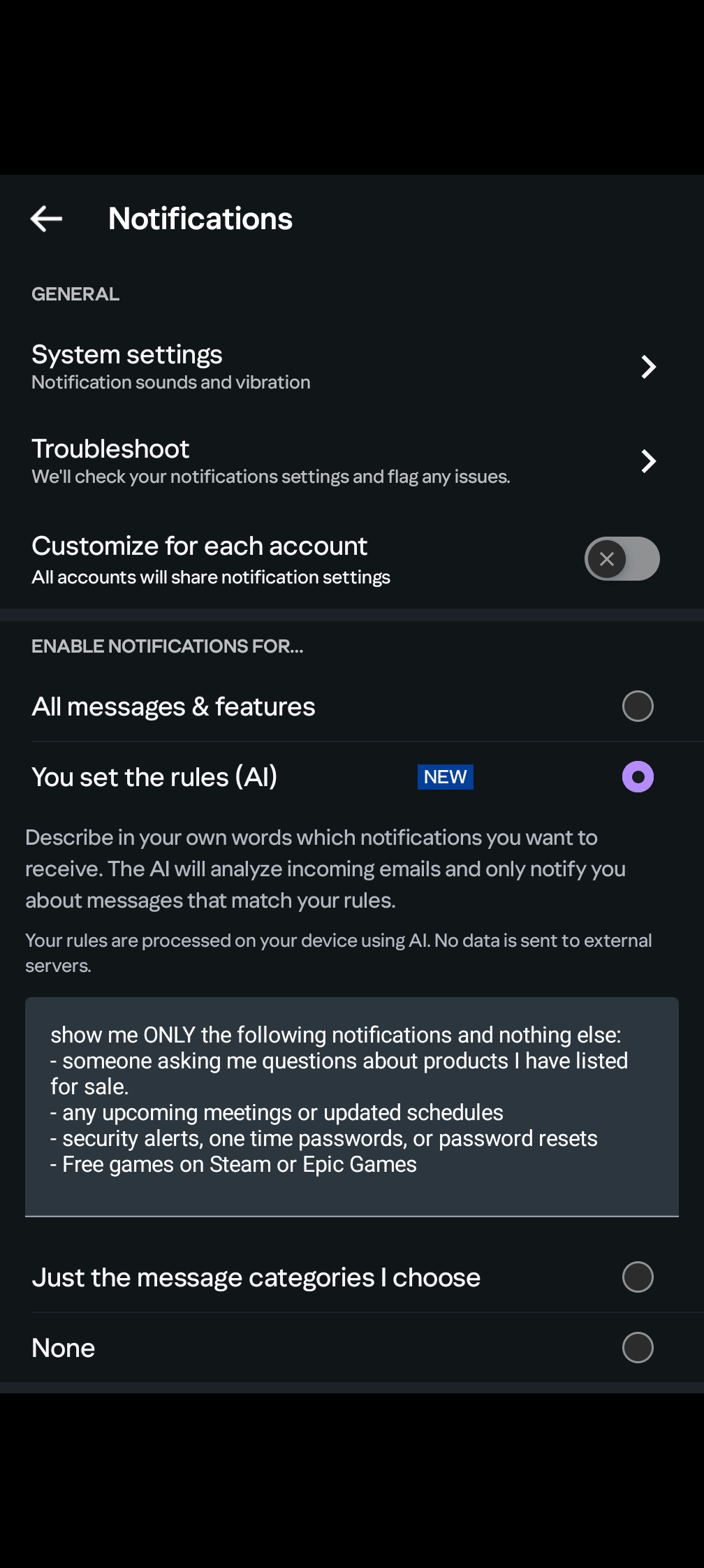
Two AI experiments on the Yahoo Mail Android notification surface. First: a server-side LLM that generated subject-line summaries for incoming email — the first AI-driven notification format the app shipped. Second: an on-device Gemini Nano flow on Pixel devices that let users write a natural-language prompt for which emails should notify them. Runs fully local — email content never leaves the device.

  • Built the AI feature opt-in flow and notification rendering on Android.
  • Pitched and implemented the on-device prompt-based notification setting end-to-end — AICore device-compatibility check, model download during discovery, the settings UI, and notification handling.
  • Privacy by default: Gemini Nano runs fully local, so email content never leaves the device. Users describe what they want to be notified about instead of Yahoo deciding for them.
  • Launch was blocked by an undocumented Gemini Nano constraint — the model can only execute while the app is in foreground. Surfaced during integration; not in the public docs at the time.
KotlinGeminiNanoOpenAIAICore
On-device Gemini Nano notification-prompt setting on Yahoo Mail AndroidFIG · 04
FEAT_05Email reminder notifications · Multi-year run, since 2018

Reminders

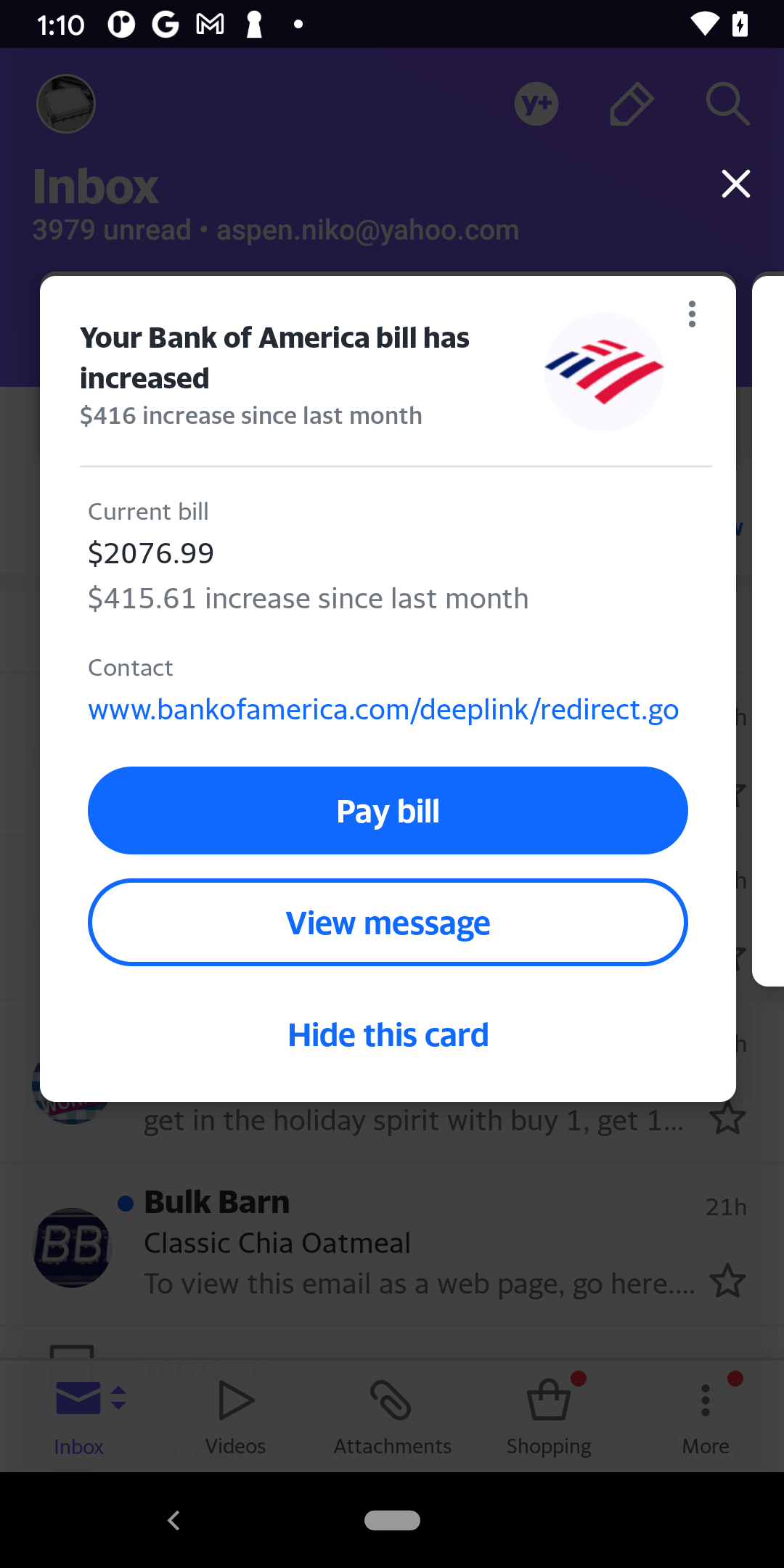
Set-a-reminder for any email — at the user-picked time, a scheduled notification fires. Started in the in-house Personal Assistant Android SDK in 2018, later folded into the Mail codebase as the assistant SDK was wound down.

  • Owned the original implementation: schema, sync, suggestion onboarding, scheduled-notification firing.
  • Migrated the feature from the assistant SDK into the Mail codebase as the SDK was wound down.
  • Suggestion-frequency rules (once per day, one type per day) and folder-aware behavior (no toasts in trash / spam / draft).
  • Concurrency hardening around duplicate-notification edge cases and unstructured-reminders support.
KotlinWorkManagerCustom Flux
Bill-reminder notification scheduled from Yahoo Mail AndroidFIG · 05
FEAT_06Camera-anchored ad unit · 2018 — 2019

Augmented Reality Ads

First Yahoo Mail Augmented Reality ad unit — Sceneform / ARCore brand creatives anchored inside the inbox. First-time domain leadership; AR was hot at the time. Decommissioned because production cost was prohibitive — ad partners didn’t bring their own AR models, so our in-house designer built a model per partner. Too expensive to scale.

  • Owned the worker-driven AR data fetch and ARCore install fallback.
  • Built the ARCore permission UX in the in-house design system.
  • Drove the Sceneform 1.7 → 1.10 upgrades for initial-rotation and camera-first rendering.
  • Cleanly removed AR / Sceneform dependencies once the format slowed.
KotlinARCoreSceneform
FIG · 06
Foundation work · Long-running ownershipPlatform & infrastructure
PLAT_01Push, channels, foreground service · 2018 — present

Notifications Platform

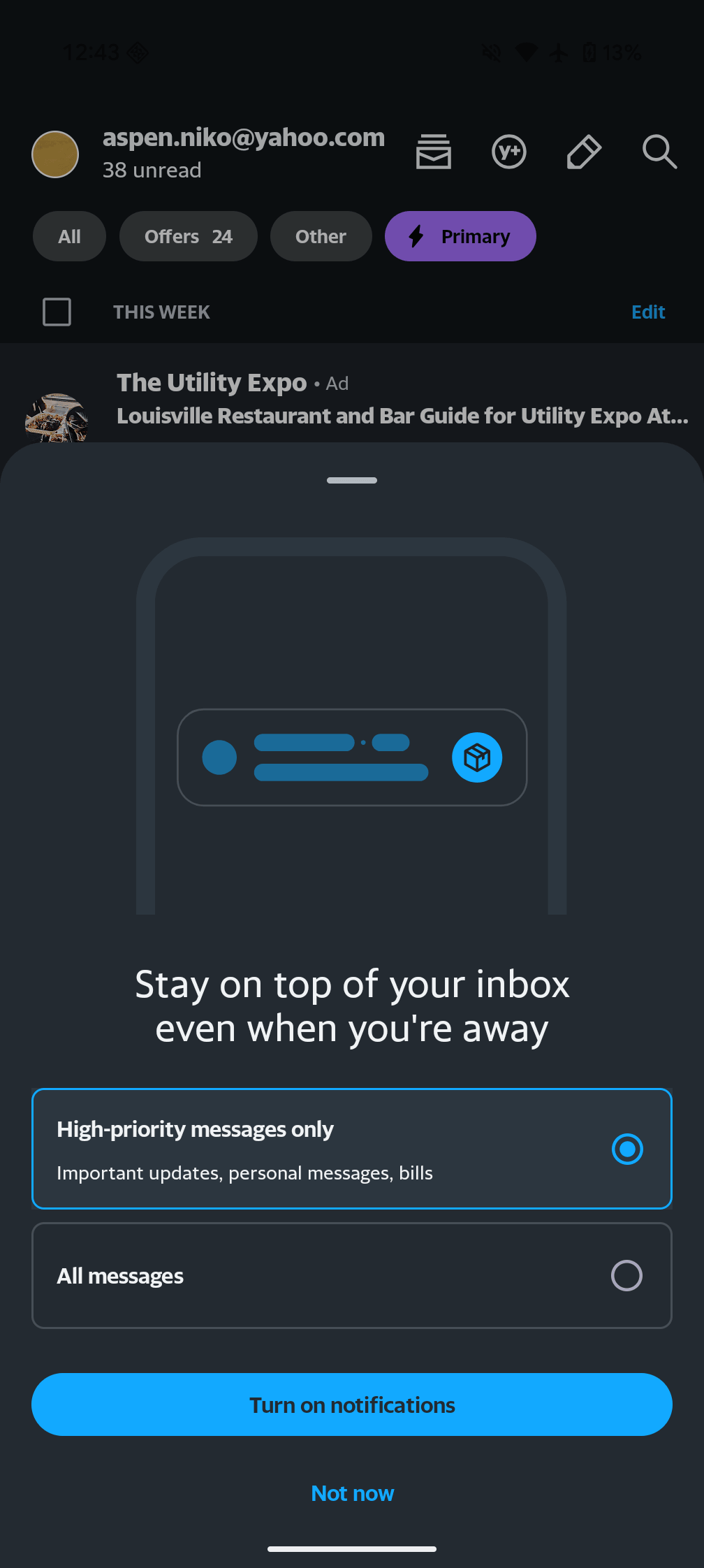
End-to-end ownership of how push messages enter the app, are dispatched, parsed, batched, displayed, and acted upon. The eight-year throughline of my work — directly tied to the DAU → ad-revenue chain.

  • Designed the foreground-service architecture for push handling under Android background restrictions.
  • Migrated from the legacy push SDK to the current in-house messaging stack; built the shared FCM / ADM dispatcher interface.
  • Migrated push messages, settings, and channel state into the custom Flux/Redux store.
  • Modularized notifications into a dedicated feature module across a 4-part refactor.
KotlinCustom FluxFCM · ADMForeground Service
Notifications platform upsell on Yahoo Mail AndroidFIG · 01
PLAT_02Self-initiated diagnostic flow · 2020

Notification Troubleshoot

A user-facing diagnostic flow that lets users self-fix “I’m not getting notifications” before leaving negative feedback or contacting support. Self-initiated off the back of recurring support pain — gives users agency and reduces support load at the same time.

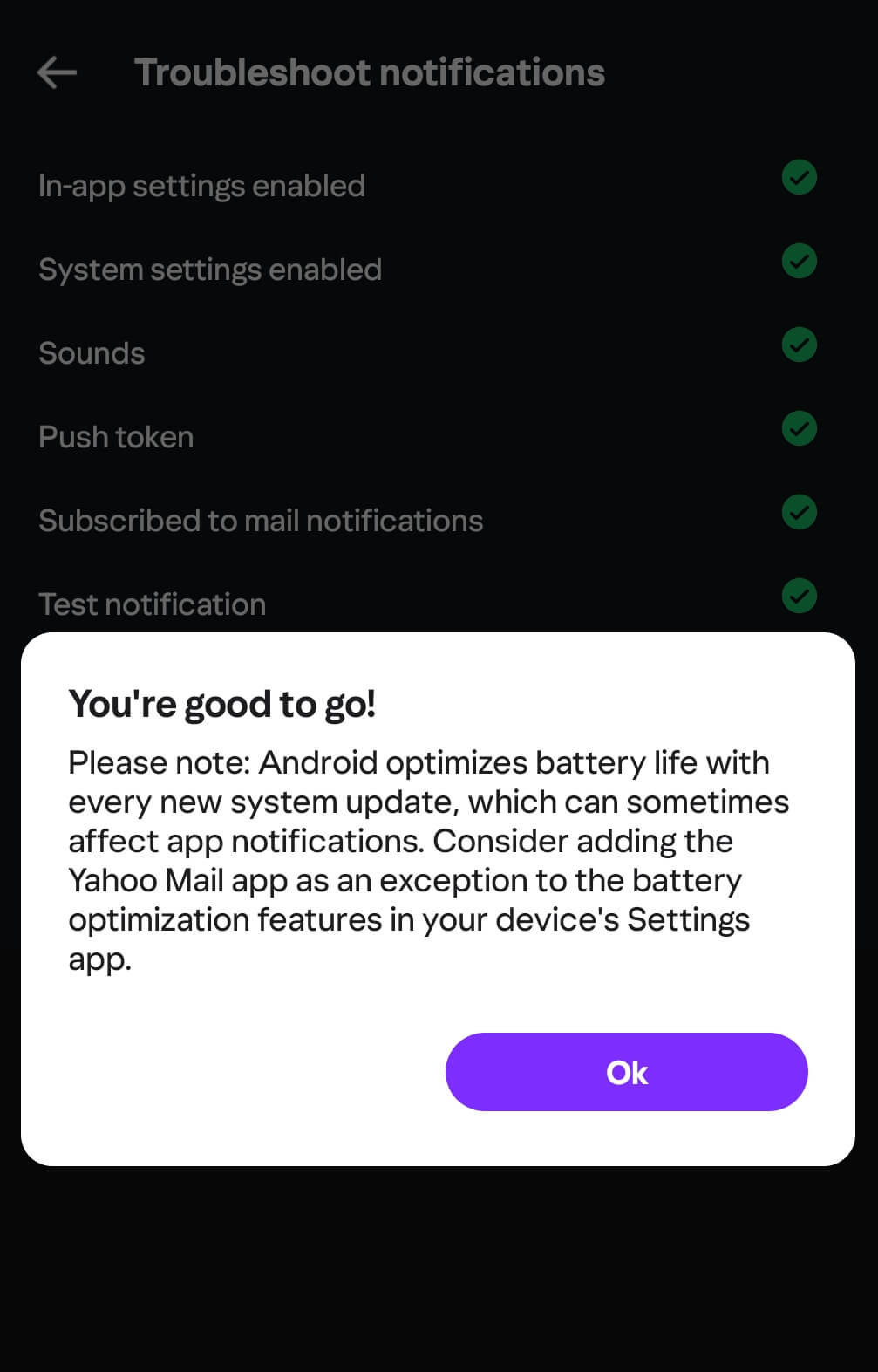
  • Verifies the app is registered with the push backends and whether each mailbox has the correct topics subscribed for emails and feature notifications.
  • Auto-resubscribes / re-registers the app when a mismatch is detected between backend state and client expectation.
  • Checks Do Not Disturb mode plus notification channels and settings — both at the system level and in-app.
  • Falls back to plain-language guidance on app-standby / Doze mode and how to remove Mail from battery optimizations when everything else looks fine.
  • Surfaced app-standby bucket history into feedback reports for backend triage; encrypted push tokens before they entered submissions.
  • ~2k users open the screen daily (auto-runs the diagnostics on entry); ~190 / day submit feedback with the results when self-fix doesn’t resolve their issue — those reports route to the team for manual review.
KotlinFeedback SDKCustom Flux
Notification Troubleshoot diagnostic flow on Yahoo Mail AndroidFIG · 02
03 / RECEIPTS
Measurable outcomes

Receipts.

Engineering-scope numbers I can extract from public PR text. Product-impact metrics (DAU lift, opt-in rates, tap-through) live in internal dashboards and stay there.

1k+
Merged PRs on Yahoo Mail Android
Still shipping · 2018 — present
8
Engineers mentored
Mostly juniors growing into mid-level work
8 yr
Unbroken ownership of the notifications platform
2018 — present
21–23M
Notifications shown to users daily
Yahoo Mail Android · Tracked metric
~2k
Notification Troubleshoot sessions daily
Auto-runs diagnostics on screen entry
IPCOM
Defensive publication on IP.com
IPCOM000275828D · March 2025
+5.6%
Lift in shares+forwards per email opener
Email Sharing experiment · Android 14
45.6%
Bulk-action completion of engaged users
Tidy Inbox · weekly experiment data
04 / IP
Defensive publication

Disposable-address form fill.

In 2025, Yahoo's IP team chose to publish my submission as a defensive publication on IP.com — prior art on the record under Yahoo's name. I authored the original idea and submission.

Read on priorart.ip.com
IP.COM● PUBLISHED
IDIPCOM000275828D
Date2025 · March 03
TitleMethod and System for Filling Forms using Disposable Email Addresses
AssigneeYahoo
TypeDefensive publication
# Authored at Yahoo. Public record on IP.com.
05 / STACK
The technical environment

What I work in, daily.

At a high level — the kind of detail I’d share in a dev talk to my team. Internal architecture, API specs, and proprietary systems are not described here.

Languages
  • $ Kotlin (primary)
  • $ Java (legacy)
UI & rendering
  • $ Jetpack Compose
  • $ View system (legacy)
  • $ In-house design system
  • $ Lottie
State & async
  • $ Custom Flux/Redux
  • $ AppScenarios
  • $ Coroutines · Flow
  • $ WorkManager
Notifications & push
  • $ FCM · ADM
  • $ Foreground Service
  • $ Notification Channels
Testing & tooling
  • $ Kotest · MockK
  • $ Espresso · Robolectric
  • $ Detekt · KtLint
06 / SURFACE
Cross-stack reach

Beyond the Android client.

Mail features rarely live in a single repo. Backend services, embedded SDKs, telemetry pipelines — every shipped feature has a footprint across the ecosystem.

FLAGSHIP · GREENFIELD

SMS Campaigns

Mail flags accounts approaching one year of inactivity for deletion and emails them a warning. The problem: an inactive inbox can’t surface that email. SMS Campaigns is the greenfield service I designed and built end-to-end to close that gap — ingesting GUID-keyed phone / email pairs from internal data warehouses and delivering SMS notifications that users will actually see.

Read the SMS Campaigns case study
BACKEND · SERVICES

Server-side counterparts to client features

Server-side work backing client features. AI logic powers LLM-driven notifications; the Mail Plus web service is shared by Android and iOS for login flows and smaller feature experiments outside the core Mail backend’s scope.

Mail Plus web service11 PRs · 2018 — 2025

Web service shared by Android and iOS Mail. Login flows, plus smaller feature experiments outside the core Mail backend’s scope: Mail Plus purchase validation, Y2Y IMAP-in redirect, Sky.com basic-auth, new-user onboarding wizard, the Email Sharing endpoint.

AI logic backend2 PRs · 2025

Server-side AI logic powering client features such as AI in Notifications, plus immediate-expiry handling for shared emails.

Personal Assistant backend49 PRs · 2017 — 2018

Backend that fulfilled assistant requests inside Mail. Brand / theming responses, rules engine, validation-experiment server.

I’ve also shipped to several internal Android libraries the Mail client depends on — image rendering (Glide upgrades, bitmap-size guards), the contacts UI library (AndroidX migration, photo previews), the in-house design system common library (icons, toast UX components), and a camera utility. Smaller changes, but they keep the dependency surface healthy and unblock client features.

Every Mail Android feature I ship also carries telemetry whitelisting and config-side support — small PRs across data pipelines and feature-config repos that instrument and track each launch end-to-end.

07 / TALKS
Internal · Yahoo

Talks & demos.

Internal-only — at the team and full-Mail-org levels. Topics span notifications architecture, AI image generation, and personal-interest deep-dives.

TALK_01Notifications architectureYahoo Mail Android team
TALK_02Notification channels deep-diveYahoo Mail Android team
TALK_03App-standby and Doze modesYahoo Mail Android team
TALK_04Reverse-engineering Yahoo Mail’s APK to remove adsYahoo Mail Android team · Personal interest
TALK_05Stable Diffusion image generationYahoo Mail Android team · February 2024
TALK_06Feature demos at the full-Mail-org levelMail org · Recurring · Every shipped feature
08 / DIFFERENTLY
Honest retrospectives

What I’d do differently.

My voice, my opinions. Not Yahoo's.

01

Captured launch metrics too late

I shipped a lot. I rarely pulled the dashboards on what shipped at the moment of launch — the impact numbers live in Splunk and Glean, but I treated them as a review-season task instead of a launch-closing one. Capturing them at-the-time would have made every retrospective stronger.

02

Underweighted writing publicly

Inside Yahoo I’m thorough — wiki docs, deep-dives, PR-review comments. Outside Yahoo I built no public footprint pointing at the work. Architecture posts, talk recordings, even a blog would compound differently than mentoring inside a single company. This case study is the start of fixing that.

03

Pushed Augmented Reality Ads past the inflection

AR was hot when we started. We invested through Sceneform upgrades, a Vodafone bucket, new ad units. The format slowed dramatically. We removed it cleanly when the call eventually came, but I’d have read the slowdown earlier and rotated effort to something with more legs.